Posts

I Know Where I'm Going?

Image
Howdy. I went on a holiday. I went camping. I went camping round some of Scotland to places where films were filmed, or places that reminded me of certain films (just put that in there before it becomes obvious). The plan was to do a blog post for each day but that was when I thought I was just going to look at a disparate collection of films in different locations around the country. That changed. So what the hell was I thinking!? I don't know really, I did it because I love film and almost five years ago to the day I spent 10 days in Nairn watching films, and that was one of the greatest experiences of my life, so I think I thought I'd try and emulate that in some way. It was never going to be the same as the last time because that was in once place, with hundreds of others and there were beanbags lying about and readily available scones, but the idea was there to just enjoy films in a different way. That's where the first night came from and the choice of  The ...
Feminis-n't

Image
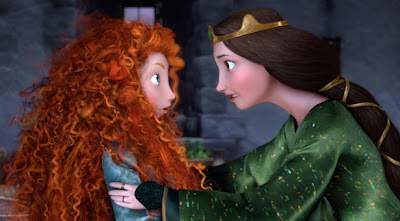
Howdy, first thing first - is that a terrible title? I think that might be a terrible title. I have to do this stuff unsupervised so things like that will happen. Anyhee, this post will have a wee look a 'strong' female roles by focusing on two recent-ish animations:   Brave (Mark Andrews and Brenda Chapman ( co directed Steve Purcell ), 2012) and  Monsters vs Aliens ( Rob Letterman and Conrad Vernon, 2009). The main reason for this is twofold I've loved Monsters vs Aliens  since the first time I saw it, in Norway no less, and I think it was woefully undervalued, in particular the lead character always who stood out for me. The other reason is the (over)praising, as I see it, of  Brave; it was garnished with awards , fawning reviews, and all sorts so it must be good, right? Well, it's not only good but it is politically challenging! It's shaking cages and rattling...some...some other cages - and knocking bins over or something...I dunno - it's progressive! Bu...

Roger Ebert (1942-2013)

Image
On Thursday, the 4th of April, Roger Ebert died and I felt I wanted to write this as I have a great affection for him. The details of Roger's life and death can be found elsewhere on the internet, this is about what he meant to me. Roger Ebert was a film critic, more accurately, and in keeping with this piece, he was my favourite film critic. That might sound like I'm being overly film-y; "Imagine having favourite film critics! What a wanker." I'm afraid to say it is true. There are other film critics whose writing and reviews and insights I enjoy but there are very few that I make a habit of reading. So why did Roger Ebert make such an impression on me? Was he always right - of course not. Film reviews are subjective, first and for most, and simply being immersed in film doesn't give you some sort of direct link to a filmmaker's mind. There were three things that made Ebert's writing stand out for me: his wit, his honesty, and his love of film. Th...

Django - It's not only the 'D' that is silent.

Image
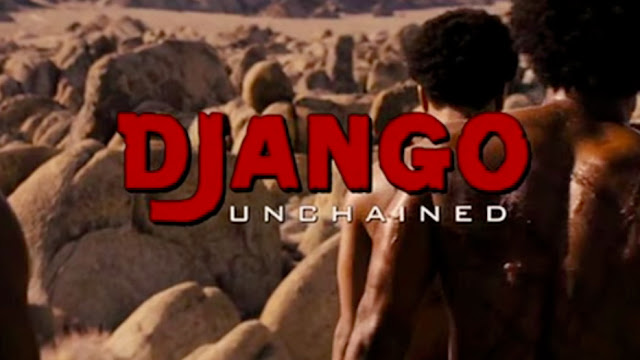
I have generally had a love, love, hate, meh, ehh, boke, yawn relationship with Quentin Tarantino (although he neither knew nor cared, and given the sensitivity of my feet that's exactly how I would like it to stay) and  I was going to write a post in critique of  Django Unchained  (2012)  but what would be the point of that? It's too late and I'd clearly be wrong after the glowing reviews a nd awards lavished upon it. I was going to say that I agree with David Walker that  the racial furore surrounding  Django Unchained  seems particular fascinated by Tarantino's use, or overuse, of the word 'nigger', a point that I think is well argued by David Walker is that this discussion side steps all the real issues; The word and its meaning come attached with an incredibly complex history that no one wants to discuss. Nigger is the  symptom of a disease called racism, which is the byproduct of slavery, which we as a nation have yet to fully...

Visual Patterns: Touch of Genius

Image
By the age of 28 Orson Welles had made his first film and that film would come to define and, arguably, haunt him for the rest his career and perhaps his life. A career dogged by unfinished projects, visions revisioned by studios and a reputation for being 'difficult' (which is what people call you if they think you're a c*nt but also want to hedge their bets), his later films were often lost in development hell and/or funding droughts. Some might say that he peaked right off the bat, personally I'm not one of them, but as he said himself, "I started at the top and worked my way down." Contracturally that may have been true but arguably not in creative terms. His first film was Citizen Kane (1941) and is a towering piece of work, influential, experimental and controversial. It frequently tops critics best film lists and is know to most people who have seen films with an regularity. Getting those same people to name three other films he made might not be s...

The Burds: Part II

Image
The continuing (limited and selective) ramble in defence of Alfred Hitchcock's portrayal of women. A wee while ago I had a look at Rear Window (1954). Inspired by an article I read that reduced Hitchcock's portrayal of women thusly:   'Hitchcock's women are outwardly immaculate, but full of treachery and weakness. But, hurrah, he doesn't kill them all. He just teaches them a thoroughly good lesson.'  ( Bidisha, 2010 ).  In that post I intended to suggest that Hitchcock counterpoints male and female points of view and that ultimately the male point of view is the one that shifts (that was the idea, don't know if I pulled it off). Here I want to look at the women in The Birds (1963) and how these characters fit into a wider societal context. Bidisha distils the essence of The Birds to this: The message is that women (a) are all about men and (b) can't get along because they're so busy pecking and squabbling over men. Mitch's mum hates Melani...