Posts

Showing posts with the label Movie

Inner Space

Image
I just seen a film at the pictures, well a wee while ago there, and I rarely write about new stuff here because...because...well I'm too...y'know...too *Ahem* lazy, but I think I might have loved this film and I think I might have loved how it used technology and so that's maybe an important thing for me to think about. That said there is absolutely no need for me to subject you to those thoughts, but that has never stopped me before. Ohh and there might be * spoilers* but I don't think so, I've seen it though so I'm probably not the best judge. Anyway the film was  Gravity ( Alfonso Cuarón, 2013 ). Starring Sandra Bullock as Ryan Stone, and George Clooney in a supporting role as Matt Kowalski. The film is the first one where I can remember people actually pushing you to see it in 3D, not only people but film critics too (if you can stomach it you can watch Mark Kermode make a typically self-indulgent mess of telling us that it is good here ) a...

Visual Patterns: Touch of Genius

Image
By the age of 28 Orson Welles had made his first film and that film would come to define and, arguably, haunt him for the rest his career and perhaps his life. A career dogged by unfinished projects, visions revisioned by studios and a reputation for being 'difficult' (which is what people call you if they think you're a c*nt but also want to hedge their bets), his later films were often lost in development hell and/or funding droughts. Some might say that he peaked right off the bat, personally I'm not one of them, but as he said himself, "I started at the top and worked my way down." Contracturally that may have been true but arguably not in creative terms. His first film was Citizen Kane (1941) and is a towering piece of work, influential, experimental and controversial. It frequently tops critics best film lists and is know to most people who have seen films with an regularity. Getting those same people to name three other films he made might not be s...

The Burds: Part II

Image
The continuing (limited and selective) ramble in defence of Alfred Hitchcock's portrayal of women. A wee while ago I had a look at Rear Window (1954). Inspired by an article I read that reduced Hitchcock's portrayal of women thusly:   'Hitchcock's women are outwardly immaculate, but full of treachery and weakness. But, hurrah, he doesn't kill them all. He just teaches them a thoroughly good lesson.'  ( Bidisha, 2010 ).  In that post I intended to suggest that Hitchcock counterpoints male and female points of view and that ultimately the male point of view is the one that shifts (that was the idea, don't know if I pulled it off). Here I want to look at the women in The Birds (1963) and how these characters fit into a wider societal context. Bidisha distils the essence of The Birds to this: The message is that women (a) are all about men and (b) can't get along because they're so busy pecking and squabbling over men. Mitch's mum hates Melani...

Dissecting a Scene (or How to Reduce Something Beautiful to a Meandering Splodge of Dull)

Image
Film is primarily a visual form, no matter how loud Michael Bay feels he has to make it, and the best of them speak in images - not just in a beautifully composed, or sumptuously rendered single image, but through an interplay of multiple, linked images.  Strangers on a Train (Alfred Hitchcock, 1951) does just that and if you'll indulge me I'll tell why I think this and how I think it goes about it. I'll do this using my  (scant)  powers of semiotic understanding on the opening 2 minutes and 17 seconds  of this pant-wettingly lovely offering from Mr. Hitchcock , which arguably shows us very little but, hopefully just as arguable tells us everything because that's the plan. (Assuming you watched the link or have seen it before) Fantastic, isn't it? Now let me ruin it - I mean explore it. Let's explore it. Ok, a real quick introduction to semiotics as I understand it. Semiotics is interested in signs, not what they mean necessarily but how they mean...

The Aesthetic Cinema of Wong Kar-Wai

Image
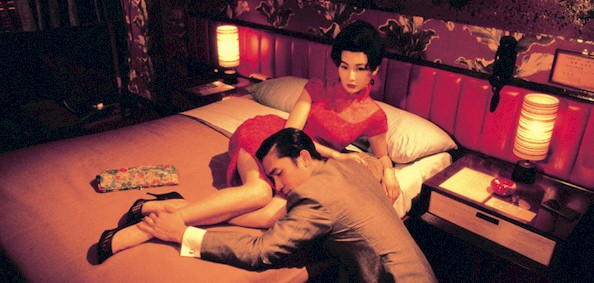
Tony Leung and Maggie Chung in In the Mood for Love (Wong Kar-Wai, 2001) Wong Kar-Wai I am often asked what my favourite film is, to which I generally reply - "Pffft!". I know! Why people ever ask me anything is quite beyond me too. But my reason for mentioning that particular flaw in my character is that while it seems utterly out with my ability to choose a particular favourite, or indeed to respond to the question in a civil, adult and mannered way, I do have a list. This list may grow and shrink over time, but in 2001 I added a film to it and it has been there ever since. In the Mood for Love was a defining moment for me and my connection to cinema. This movie more than most underlined the notion that what particularly moves me is film form; rather than just character, narrative or singular technical aspects, it is the collision of these things that resonates for me in film and makes them stay with me. Tony Leung in the sumptuous In the Mood for Love The fi...

The Taking of Inside Man

Image
Howdy, long time no ramble, but I've just watched Tony Scott's update of The Taking of Pelham 123 (2009) and found it impossible to resist the urge to post...well...a post on the differences between this film and Inside Man (Spike Lee, 2006). I must have a reason for saying this - it's only right. You can't just go around arbitrarily comparing stuff: "Do you know why apples are better than magnesium?" or "Penguins are better swimmers than walnuts." That kinda thing just doesn't wash and is not the type of chatter I wish to engage in here - you're busy, I'm busy...y'know. Source: www.reelreview.co.uk/?p=542 The Taking of Pelham 123 is based on a novel by John Godey and will obviously pay more than a passing glance to the 1974, Joseph Sargent film of the same name and source material, but (and here is the point at last) I think the text it takes the most inspiration from (or perhaps tries to emulate) is Spike Lee's 2006 heis...

The Tree of Life (Terrence Malick, 2011)

Image
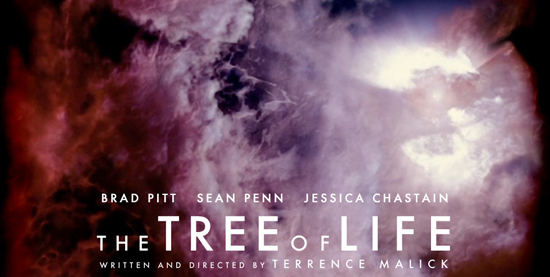
What's all that about then? What's all that about!? What's it not about more like! It is life and love and death. A beautiful collage of everything that makes life beautiful, scary, exciting, frustrating, wonderful, angering, reassuring and unsettling; a visual poem that is at it's best when the narrative is sidelined for montage. The sequence surrounding the birth and infant years of the son is quite staggering. Terrence Malick has always liked trees and this film is no different, lots of lovely low angle shots up through the branches, splitting the light in kaleidoscopic shards. The fractured light might be seen as symbolic for the contradictions that shaped the man; a beautiful whole pulled in different directions, both mystifying and simple. A complex work of tremendous beauty that may be wonderfully profund and delicate, or maddeningly boring and pretentious. Go on, find out. J

'Drive'

Image
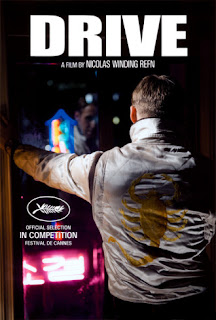
Drive (2011) the new film by Nicolas Winding Refn is (perhaps expectedly) a dark, violent, brooding affair but (perhaps unexpectedly) one with a great deal of heart. At Cannes, the film garnered a Palme d'Or nomination and picked up the Best Director award for...well, the director and, in a ridiculously unfounded assertion having only seen one of the other films in competition, it was well deserved. The beginning (and most of the rest) of the film invites comparison with Walter Hill's 1978 film The Driver , with Gosling even resembling Ryan O'Neill at times - at the film's credit in low-key lighting and from a low angle I, just for a minute, thought it was Ryan O'Neil. Parttime stunt driver, parttime mechanic, parttime getaway driver and fulltime toothpick chewing 'brooder' Ryan Gosling plays the unnamed lead, with no past he just drifts into his closest friends life like a Sergio Leone hero, and dares to dream of a future as he becomes involved with a ...